Method
Unique concept.
Own development.
Completely different approach.
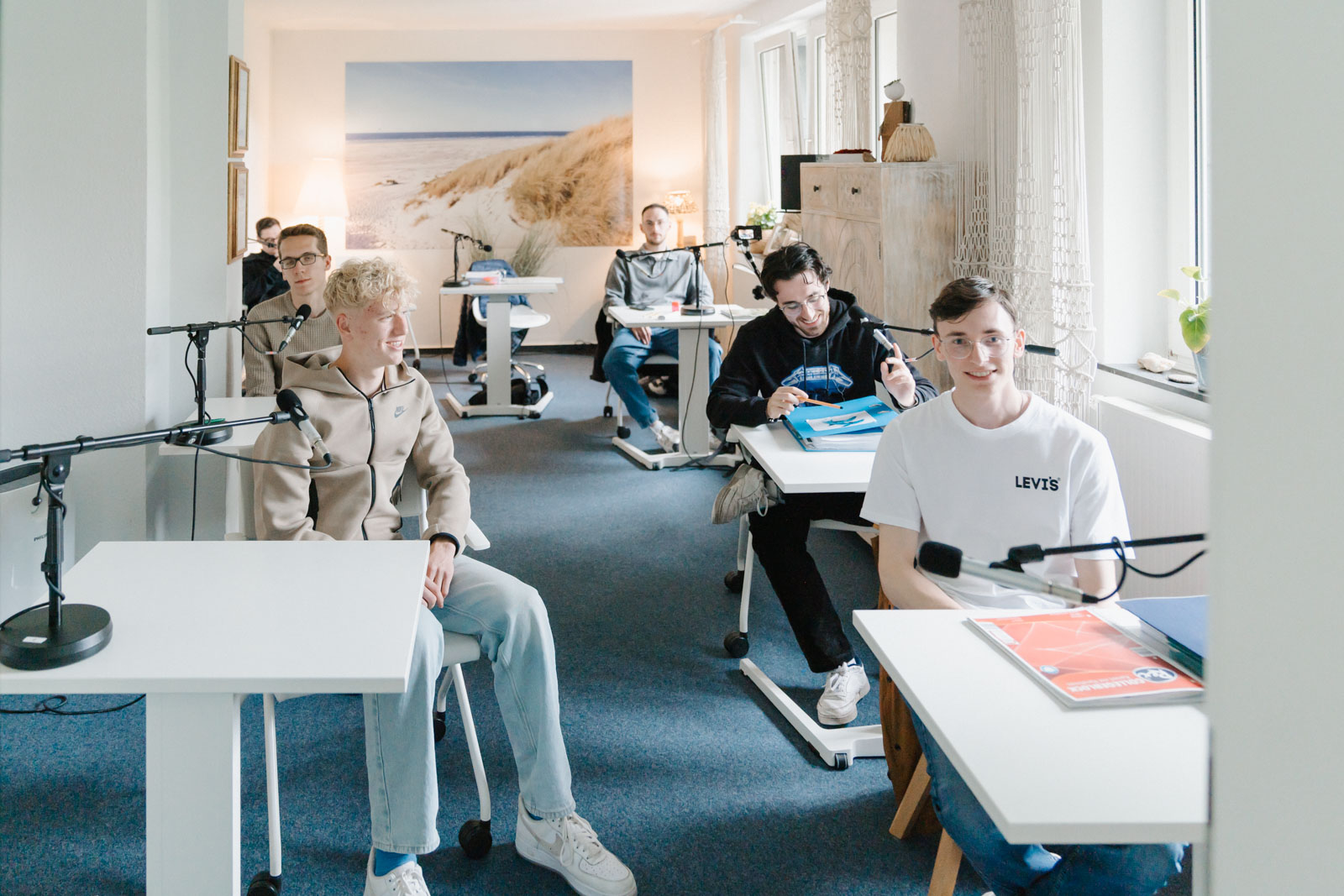

Stuttering is recognized as a lifelong condition that can benefit from ongoing speech and psychological support. Traditional approaches typically focus on equipping individuals with strategies to manage stuttering, such as sound prolongation or controlled techniques to navigate speech blocks more smoothly.

Development and Evolution of the Therapy
In 1987, Professor Dr. Eberhard Kruse, then Regional Medical Officer of the State of Hesse, approved the establishment of the therapy. After a thorough evaluation of the method, he authorized the concept as a beneficial form of treatment at the Speech Therapy Center in Gießen in his capacity as Regional Medical Officer, phoniatrician, and director of the School of Speech Therapy at the University of Marburg. On August 12, 1987, the first year-long course commenced at the Speech Therapy Center in Gießen. At that time, the therapy spanned an entire year, during which affected children and adolescents lived in residential care at the center. This required them to forgo a school year and limited family visits to every other weekend.
From that point on, Sabine Schütz continuously refined and developed the therapy, eventually achieving the same level of success with a three-week outpatient intensive format. A key focus for her was involving parents in the therapy process—something that had not been included in the residential program. Stuttering is a condition that impacts the entire family: siblings or parents often speak on behalf of the person who stutters, and parents experience significant emotional strain when their child stutters.
Since 1995, the therapy has been offered exclusively in this outpatient format through Sabine Schütz’s own speech therapy practice. Professor Dr. Kruse also supported the adaptation of the concept into an intensive outpatient therapy as a scientist and advocate.
As a phoniatrician, Professor Dr. Kruse firmly believes that stuttering can be overcome and has actively promoted recognition of this therapy approach. We are deeply grateful to have had such a dedicated and knowledgeable supporter by our side for so many years.

Professor Dr. Kruse
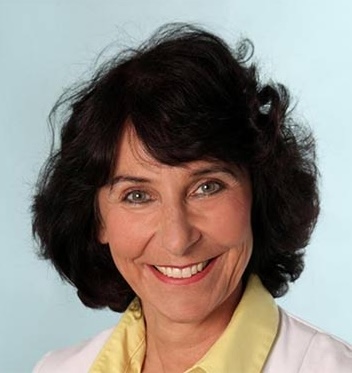
Professor Dr. Keilmann

Scientific Evidence of Effectiveness
The primary goal of the therapy is to overcome stuttering and achieve fluent speech, even in severe cases. Using our method, it is possible to attain natural, stutter-free speech that blends seamlessly into everyday life. The speaking technique serves as a bridge to lasting, normal, and fluent communication.
An evaluation conducted by Johannes Gutenberg University Mainz, under the direction of Prof. Dr. Keilmann, confirmed the therapy’s effectiveness. The results were published internationally in the journal Logopedics Phoniatrics Vocology.
Additional scientific evidence comes from the bachelor’s thesis of Sonja-Marie Schütz, an academic speech therapist since August 2014. Her multiple case study demonstrates the positive effects of the D.E.L.P.H.I.N. stuttering therapy on stuttering symptoms.
Speaking fluently from the very beginning
A unique therapy concept worldwide
Over 35 years of experience
Learn about our unique therapy concept and see for yourself the effectiveness of the outpatient intensive therapy for stutterers by Schütz.